About RePo-SUDOE Docking Assistant
Mission
Our mission is to make molecular docking accessible to clinical and biomedical researchers who do not have a background in bioinformatics. Within the RePo-SUDOE drug repurposing programme, we offer a conversational assistant that explores a curated catalog of compounds and therapeutic targets, launches AutoDock Vina experiments on HPC infrastructure, and returns results that are both visual and interpretable.
The goal is to shorten the distance between a clinical hypothesis such as "which already-approved drugs might bind this target?" and a first piece of computational evidence, while preserving traceability, reproducibility, and the scientific standards required when the results may inform downstream clinical research.
Meet the team
Dr. Carlos Fernandez-Lozano
Project lead, maintainer, and researcher at Universidade da Coruna (CITIC)
Dr. Francisco Abel Cedron
Professor and researcher at Universidade da Coruna. Technical collaborator.
In collaboration with RePo-SUDOE
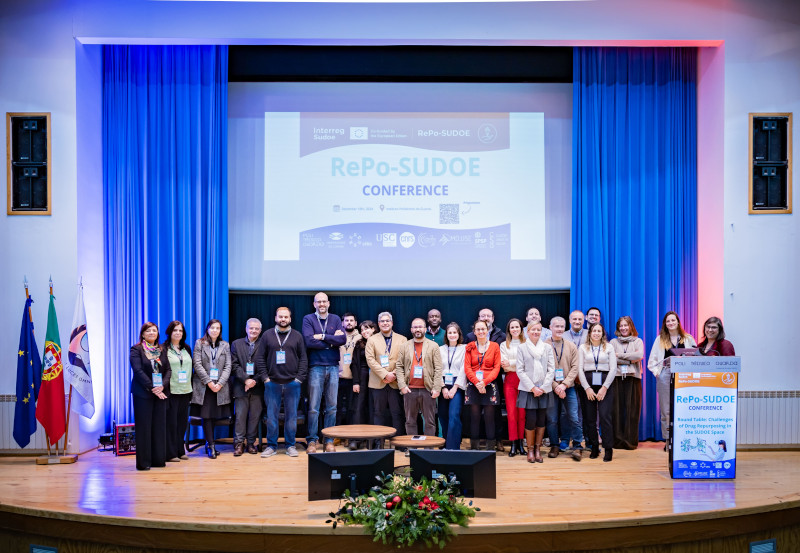
RePo-SUDOE is a European research initiative that accelerates the discovery of new therapies through drug repurposing. By reusing existing medications, the project aims to make the process faster, more cost-effective, and more efficient. Its main objective is to establish the SUDOE region (Southwest Europe) as a leader in this field by fostering collaboration between universities, research institutions, and biopharmaceutical industry companies.
With a focus on cutting-edge technologies, advanced visualization tools, and transnational cooperation networks, RePo-SUDOE drives high-quality research and innovation, initially targeting cancer treatment while enhancing the region's scientific and technological competitiveness.
The pharmaceutical development process often faces high failure rates, costs, and delays. This highlights the importance of drug repurposing, which finds new therapeutic uses for existing market drugs, benefiting the pharmaceutical industry, society, and patients alike.
Companion platform
This assistant complements RePo-SUDOExperiments, the project's virtual research environment that curates genes, proteins, and drugs and runs docking jobs on the CESGA HPC infrastructure. Together they cover the full path from hypothesis to computational evidence.
Beneficiaries
- Instituto Politécnico da Guarda (Portugal)
- Universidade da Coruña (Spain)
- Universidade de Santiago de Compostela (Spain)
- Centre National de la Recherche Scientifique (France)
- MD.USE Innovations S.L. (Spain)
- Sociedade Portuguesa de Saúde Pública (Portugal)
- Asociación Cluster Saúde de Galicia (Spain)
Associated partners
- Servizo Galego de Saúde, Dirección Xeral de Asistencia Sanitaria (Spain)
- Centro Académico Clínico das Beiras (Portugal)
- Cancéropôle (France)

Credits and license
This application continues the work initially developed as a Final Degree Thesis (TFG) at Universidade da Coruna. The code base and documentation inherited from that release remain available under the original Creative Commons Attribution 4.0 International (CC BY 4.0) license. New contributions introduced from April 2026 onwards are distributed under the Apache License 2.0. When redistributing this software, please preserve the attribution to the original author and the NOTICE file of the repository.
Initial development team
- Pablo López Martínez. Author of the original TFG. LinkedIn.
- Dr. Ángel Piñeiro Guillén. TFG co-director, Universidade de Santiago de Compostela. Expert in simulation and molecular biophysics. LinkedIn.
- Dr. Carlos Fernandez-Lozano. TFG co-director, Universidade da Coruna (CITIC). Current project lead and maintainer. ORCID.
Cite this work
Fernandez-Lozano, C. (2026). RePo-SUDOE Docking Assistant [Software]. Universidade da Coruña. https://repo-bot.citic.udc.es

Based on: Lopez Martinez, P. (2025). Development of a web system for molecular docking driven by natural language using the OpenAI API [Final Degree Thesis]. Universidade da Coruña. CC BY 4.0.
https://ruc.udc.es/entities/publication/167c0fa3-5fe1-4114-a923-6713cef62cbb